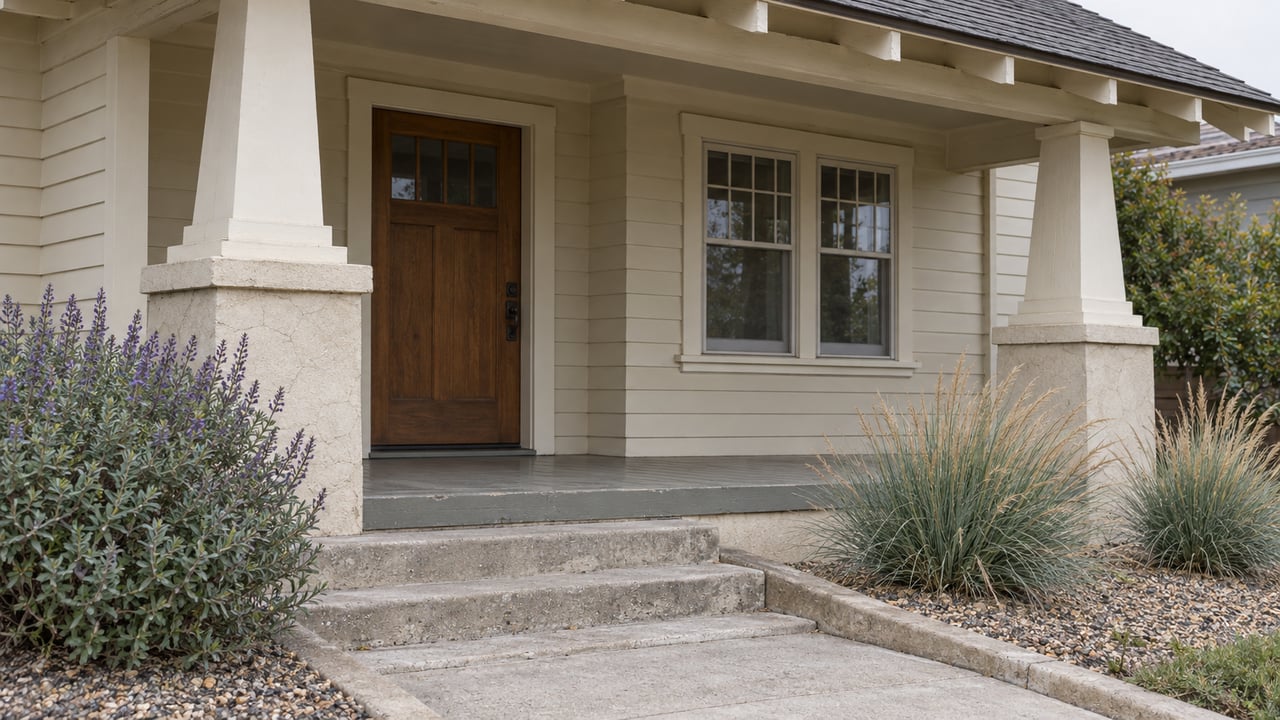
A Craftsman bungalow in the Highland Park-Garvanza Historic Preservation Overlay Zone can carry every visual marker of a Mills Act property: the original clinker brick porch, the box-beam ceiling, the multi-light wood windows nobody swapped for vinyl. None of that gets a buyer a property tax reduction anymore. The City of Los Angeles has not accepted a new Mills Act application since 2020, and five years later, the door is still closed.
That distinction matters more in Highland Park than almost anywhere else in the city. The Highland Park-Garvanza HPOZ is the largest historic preservation zone Los Angeles has designated, covering roughly 4,000 structures and more than fifty individually recognized Historic-Cultural Monuments. It was also the first HPOZ in the city to fold commercial buildings into its protections. The district traces its architectural identity to the Arts and Crafts movement that took hold here in the early twentieth century, shaped in part by Charles Lummis, founder of the California Landmarks Club, and by institutions like Occidental College and Judson Studios, which is still producing stained glass on the same site it opened on generations ago. Queen Anne, Shingle, Mission Revival and Tudor Revival homes all show up on these blocks, but the Craftsman bungalow is the style that defines the neighborhood's character to most buyers walking it today.
How a Mills Act contract actually works
The Mills Act is a 1972 state program that lets a city trade a reduced property tax assessment for a binding preservation commitment. In Los Angeles, it has served as the city's primary historic preservation incentive since 1996. A qualifying owner, meaning someone with a designated Historic-Cultural Monument or a contributing property inside an HPOZ, signs a contract with the city. Once recorded, the county assessor stops valuing the home using standard market comparables and instead applies an income-based formula tied to comparable area rents. The assessor then compares that restricted value against both current market value and the standard Proposition 13 factored base value, and enrolls whichever of the three is lowest. For most owner-occupied historic homes, that restricted figure lands well below a conventional assessment.
The contract runs for an initial ten years and renews automatically every year, which means the term is always rolling forward. It is recorded against the property itself, not the person who signed it, so when the home sells, the contract and its tax treatment transfer directly to the new owner. That transferability is the entire reason the freeze matters for a buyer today. A Mills Act contract already in place is a real, assumable financial benefit. A home that merely qualifies for one, on paper, is not.
Why the door closed and hasn't reopened
In 2020, Los Angeles City Planning began a comprehensive assessment of the program's sustainability, working with historic preservation consultant Chattel, Inc. and subconsultant AECOM. The resulting 2022 report found that the volume of active contracts had outgrown the city's administrative capacity to manage them properly, and that the tax savings were concentrated disproportionately in neighborhoods with lower barriers to opportunity rather than spread evenly across the city. The city has not accepted a new application since that review began.
City Planning released draft reform recommendations in March 2025, covering fee structures, renewal policy, and new valuation caps, along with a proposal to require any new applicant to satisfy at least three of five priority criteria:
- Necessity
- Uniqueness
- Investment
- Affordability
- Employment
Those recommendations have not advanced. The Los Angeles Conservancy's ongoing tracking of the program attributes the delay to the city's fiscal year 2025-26 budget deficit, and as of this writing, no reopening date has been announced. The $1.5 million assessed-value threshold still listed for single-family applicants (a number most Highland Park bungalows fall well under) is effectively academic right now, since the city isn't taking applications regardless of whether a specific property would qualify.
The one piece that did move
While the broader reform stalled, one change did clear the City Council. On December 20, 2025, the Council approved a new annual maintenance fee structure for existing Mills Act contracts, effective February 23, 2026. It applies only to contracts signed after 2014, a group the city counts at 246 citywide.
| Property Type | Annual Fee (effective Feb. 23, 2026) |
|---|---|
| Residential 1-4 units or commercial/mixed-use up to 50,000 sq ft | $675 |
| Residential 5-49 units or commercial/mixed-use up to 100,000 sq ft | $861 |
| Residential 50+ units or commercial/mixed-use over 100,000 sq ft | $1,086 |
Most Highland Park bungalows with a Mills Act contract fall into the first tier. For a recent buyer who inherited a post-2014 contract at closing, that $675 a year is a new, real line item in the carrying cost of the home, not a hypothetical. It doesn't erase the tax savings the contract still provides, but it changes the net number a buyer should run before assuming a discounted assessment is pure upside.
What this means before you write an offer
If you're evaluating a Craftsman bungalow in the Highland Park-Garvanza HPOZ, the architectural box being checked and the tax box being checked are two separate questions. "Eligible" describes a property that meets the criteria on paper. It says nothing about whether a contract actually exists, and with new applications frozen since 2020, eligibility alone can't be converted into one right now.
The only way to confirm whether a specific home carries the benefit is to check the recorded contract itself, which is a matter of public record with the county assessor rather than something to take on a listing description's word. A home with an existing, recorded Mills Act contract is functionally a different asset than a nearly identical one without it. It has a lower assessed value locked in through an income-based formula, an annual fee if the contract postdates 2014, and no cancellation history to worry about, since the city reports that to date, no Mills Act contract in Los Angeles has ever been canceled. The reform proposals would add real teeth for future defaults, but that hasn't been adopted either.
For anyone weighing a bungalow purchase in this HPOZ, or pricing one to sell, the practical move is the same one you'd apply to any other assumable financial instrument attached to real property: verify what's actually recorded, not what the architecture implies should be there. Our related guide on buying a character bungalow in Highland Park walks through the other due-diligence steps specific to this housing stock, and our piece on Highland Park's hillside construction rules covers a separate regulatory layer that can apply to the same lots.
FAQ
Does a Mills Act contract cancel when a Highland Park home sells? No. The contract is recorded against the property and transfers automatically to the new owner at closing, along with the restricted tax assessment.
Can I apply for a new Mills Act contract on a Highland Park HCM I just bought? Not currently. Los Angeles has not accepted new applications since 2020, and no reopening date has been set as of this writing, regardless of whether the property would otherwise meet the value thresholds.
Does the new annual fee apply to every Mills Act property in Highland Park? Only to contracts signed after 2014. Older contracts are not currently subject to the fee approved in December 2025.
If you're looking at a Highland Park listing and the Mills Act question hasn't been answered yet, either as a buyer trying to price the real carrying cost or a seller trying to document what your home actually carries, RSR Real Estate can pull the recorded contract history before you set a number. Request a Private Consultation and we'll get you the documentation, not just the description.