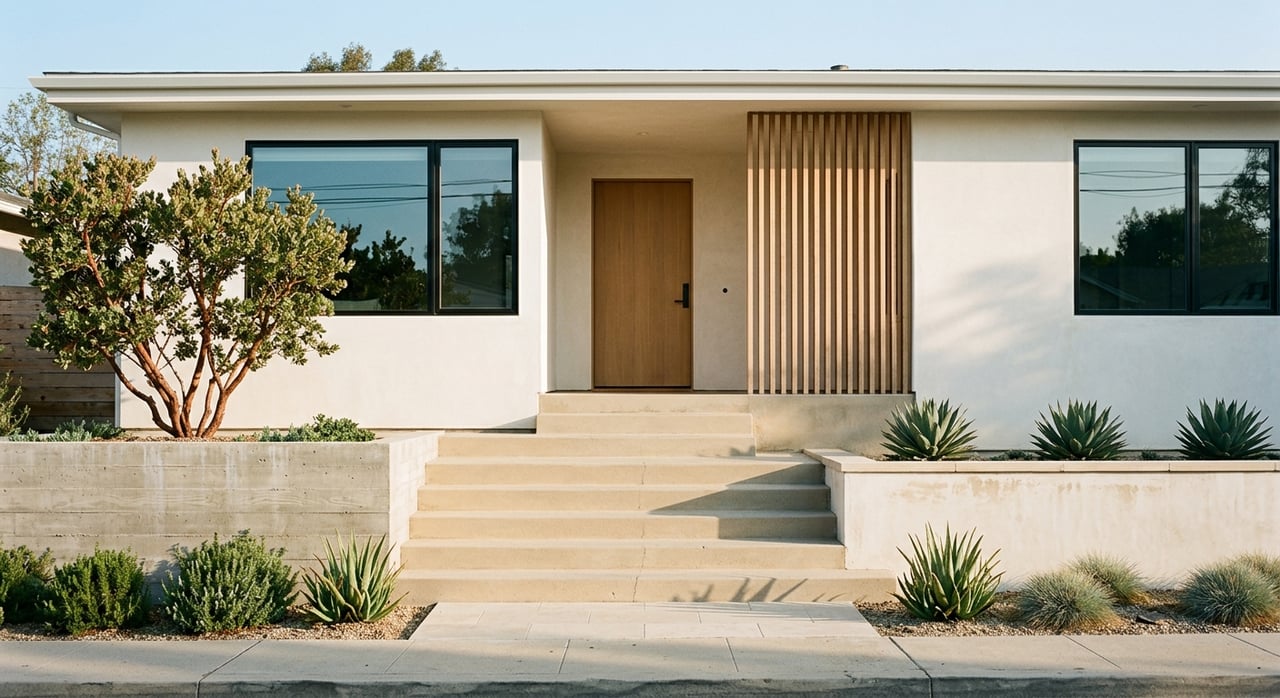
If you love architecture, Los Feliz rewards you block by block. Few Los Angeles neighborhoods offer this kind of visual range, where hillside streets, historic apartments, whimsical courts, and landmark homes all sit within a compact area. Whether you are exploring for inspiration, considering a move, or simply trying to understand what makes Los Feliz so enduring, this guide will help you read the neighborhood with a sharper eye. Let’s dive in.
Why Los Feliz Feels So Distinct
Los Feliz is not defined by one single architectural style. Its character comes from layers of development that reflect the hillside terrain, early subdivision patterns, and later waves of residential design.
City Planning’s SurveyLA materials describe Los Feliz Heights as a cohesive Period Revival district on the south-facing slope of Mt. Hollywood. The area is known for curving streets, public stairways, mature landscaping, and long views, all of which shape how the homes sit on the land.
That topography matters when you walk the neighborhood. In Los Feliz, architecture is not just about façades. It is about how homes meet the slope, how streets bend with the terrain, and how each block reveals a slightly different rhythm.
What You’ll See on a Walk
A good Los Feliz walk feels like a sequence of architectural pockets rather than a single open-air museum. SurveyLA notes the neighborhood includes early hillside development, a multi-family corridor along Los Feliz Boulevard, and a mix of later infill that adds to the visual variety.
For you as a walker, that means one route can show very different housing types in a short span. You may move from large Period Revival residences to courtyard apartments, then pass a playful Storybook stop or a singular modernist property.
This variety also helps explain the neighborhood’s broad appeal. Different blocks speak to different buyers, and that layered character is part of what gives Los Feliz its lasting design relevance.
Signature Styles to Notice
Spanish Colonial and Mediterranean Revival
Much of Los Feliz’s classic visual identity comes from its 1920s to 1940s Period Revival homes. In Los Feliz Heights, SurveyLA specifically identifies Spanish Colonial Revival, Mediterranean Revival, Colonial Revival, and Tudor Revival residences.
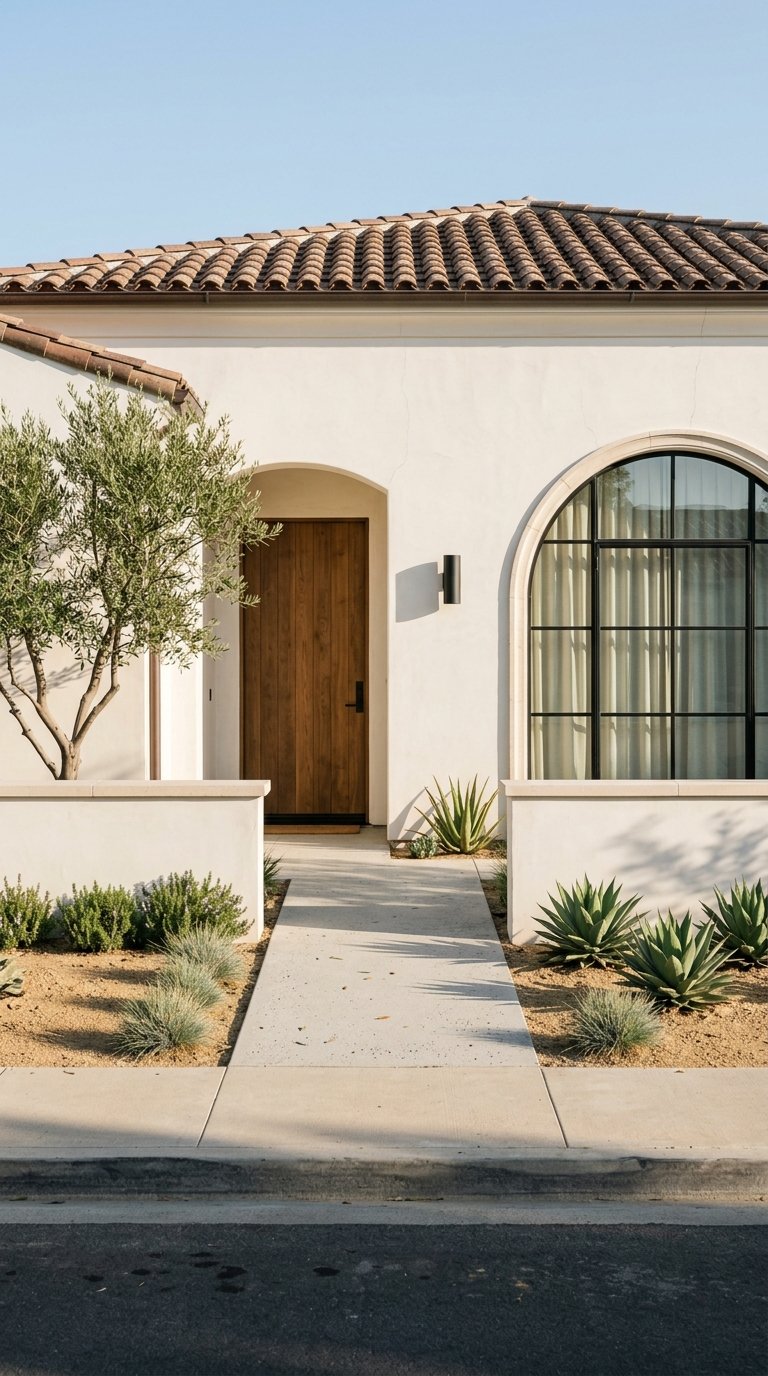
If you want an easy field guide, look for smooth stucco walls, clay tile roofs, arcades, courtyards, wrought-iron details, French doors, and asymmetrical massing. These features appear throughout the hillside areas and create the warm, layered look many people associate with historic Los Angeles living.
The Miller Residence at 5060 W. Los Feliz Boulevard, built in 1922, is one local example that reflects these cues. Even if you are only viewing from the street, details like roofline, window shape, and entry composition can tell you a lot.
Storybook Homes and Cottage Courts
Los Feliz also has a smaller, more whimsical side. The Snow White Cottages at 2906 Griffith Park Blvd., built in 1931 to 1932, are identified by City Planning as a Storybook bungalow court.
The style leans into fantasy. City Planning describes Storybook design with features like asymmetry, shallow stone steps, turrets, and conical roofs.
This pocket offers a different scale from the larger hillside homes. It is a reminder that architectural interest in Los Feliz is not limited to grand residences. Sometimes the most memorable stop is compact, theatrical, and deeply rooted in early Hollywood-era imagination.
Mid-Century and Late Modern Outliers
Modernism appears in Los Feliz more as a series of individual statements than as one continuous district. That makes modern properties feel especially interesting when they appear among older housing stock.
Two notable examples help tell this part of the story. John Lautner’s Midtown School at 4155 Russell Ave. features folded roofs and hexagonal classroom buildings, while the 1975 Milt Davis House at 2615 Nottingham Ave., designed by Ed Niles, uses redwood siding, open decks, and siting that responds to views.
These buildings expand the usual Los Feliz narrative. They show that the neighborhood’s design significance did not end with the 1920s and 1930s.
Wright Landmarks and Architectural Icons
No design guide to Los Feliz feels complete without Frank Lloyd Wright. Hollyhock House on Olive Hill and Ennis House on Glendower Avenue are two landmarks that anchor the neighborhood’s architectural reputation.
Hollyhock House was Wright’s first Los Angeles commission and formed the centerpiece of Aline Barnsdall’s proposed artists’ colony. It is also part of a UNESCO World Heritage listing.
Ennis House, Wright’s last and largest textile-block house in the Los Angeles area, adds another layer of prestige to Los Feliz’s architectural profile. Together, these landmarks help explain why the neighborhood continues to attract buyers and admirers who see architecture as more than real estate.
Best Los Feliz Walking Pockets
Los Feliz Heights Streets
If your goal is classic residential Los Feliz, start in Los Feliz Heights. SurveyLA identifies this as the most coherent walking area for understanding the neighborhood’s hillside Period Revival character.
The district runs roughly from Nottingham Avenue to Vermont Avenue, and from Los Feliz Boulevard up toward Griffith Park. As you walk, pay attention to the curving street pattern, stairways, mature vegetation, and changing sightlines.
This is where you can feel the relationship between architecture and topography most clearly. The homes are compelling, but the larger design lesson is how the entire district was laid out to follow the hill.
Los Feliz Boulevard Corridor
For a more urban design experience, head to the Los Feliz Boulevard corridor. SurveyLA describes this area as a multi-family historic district with apartments, courtyard buildings, and garden apartments dating from 1920 to 1969.
The corridor contains about 115 multi-family properties, and SurveyLA notes that about 83 percent are contributors to the district. Styles here include Spanish Colonial Revival, Mid-Century Modern, and Minimal Traditional, set within a streetscape marked by mature cedar trees and ornate lampposts.
This pocket gives you a different lens on Los Feliz. It shows how the neighborhood developed not only as a hillside enclave, but also as a denser residential corridor shaped by transportation and urban growth.
Griffith Park Boulevard Stop
If you are especially drawn to whimsical architecture, Griffith Park Boulevard is worth adding to your route. The Snow White Cottages make this the clearest Storybook stop in the neighborhood.
This is best approached as a public-street viewing moment. Because the cottages are part of a private residential complex, the experience is about observing the exterior character rather than entering the property.
For design lovers, that restraint is part of the point. Some of Los Feliz’s most memorable places are best appreciated through proportion, silhouette, and streetscape context.
Olive Hill and Glendower Avenue
Olive Hill is a natural anchor for understanding Los Feliz design history. Hollyhock House connects the neighborhood to a broader conversation about modern architecture, patronage, and Los Angeles cultural history.
Glendower Avenue adds another key stop with Ennis House. Even from the exterior, it helps illustrate how authorship and architectural provenance can shape a home’s identity.
Together, these landmarks show the top end of Los Feliz’s design range. In this part of the neighborhood, architecture carries both visual impact and cultural significance.
Laughlin Park as Context
Laughlin Park is important to know, even if it is not part of a self-guided walk. SurveyLA describes it as a gated community with private streets between Los Feliz Boulevard and Franklin Avenue, and notes it was not visible from the public right-of-way during survey work.
Architecturally, it includes Craftsman, Spanish Colonial Revival, Mediterranean Revival, and Mid-Century Modern homes. Still, for practical purposes, it is better understood as part of Los Feliz context than as a place to explore on foot.
How to Read Architecture Like a Local
A stronger walk starts with looking beyond style labels. In Los Feliz, try to notice how a building handles the lot, the slope, the entry, and the transition from street to house.
Look at details in sequence:
- Roof shape and material
- Window placement and proportion
- Courtyard or garden relationship
- Stairways and retaining walls
- How the building meets the hillside
- Streetscape elements like lamps, trees, and setbacks
This approach helps you understand why one block feels formal, another feels cinematic, and another feels quietly modern. In Los Feliz, design is often about composition as much as decoration.
Viewing Etiquette Matters
Many of Los Feliz’s notable homes are private residences, and that should shape how you explore. The right approach is observational and respectful.
Use sidewalks, public stairways, and curbside pullouts only. Do not enter driveways or gates, and avoid blocking residential access.
That standard matches the way the City documents historic resources, which are surveyed from the public right-of-way. It also reflects the privacy expectations that come with many architecturally significant homes.
Why This Matters for Buyers
If you are considering buying in Los Feliz, an architecture walk can tell you more than listing photos ever will. It gives you a feel for how different pockets live, how the streets unfold, and where your own design preferences fit.
Recent market snapshots place Los Feliz at the premium end of the Los Angeles market. Redfin reported a March 2026 median sale price of $2.2 million, up 21.9 percent year over year, while Realtor.com reported a March 2026 median list price of $2.32 million, with 94 properties for sale and homes selling at 99 percent of list price on average.
The practical takeaway is that Los Feliz spans multiple price bands rather than one uniform market. Hillside Period Revival homes and landmark estates sit at the high end, while the boulevard corridor’s multi-family buildings and smaller attached homes can offer different entry points, depending on the property and its context.
Historic Status and Research Tools
If a home catches your eye, it helps to know how to verify its historic status. In Los Feliz, HistoricPlacesLA and SurveyLA are the main official tools for confirming whether a property is a historic district contributor, an eligible resource, or a designated landmark.
That distinction can matter if you are evaluating architectural significance, neighborhood context, or a property’s place within a broader historic district. It is one more reason to approach Los Feliz with both curiosity and precision.
For design-minded buyers, those details are part of the story. In a neighborhood like this, provenance and context often shape interest just as much as square footage.
If you are thinking about buying or selling an architecturally notable home in Los Feliz, a thoughtful neighborhood read can make all the difference. RSR Real Estate brings a design-forward, discreet approach to Los Angeles real estate, with the market fluency to help you understand not just what a home is, but why it matters.
FAQs
What architectural styles are most common in Los Feliz?
- Los Feliz is known for a layered mix, with Spanish Colonial Revival, Mediterranean Revival, Colonial Revival, and Tudor Revival especially visible in Los Feliz Heights, plus Storybook, Mid-Century Modern, and later modern outliers in select pockets.
Where should you start a self-guided architecture walk in Los Feliz?
- Los Feliz Heights is the clearest starting point if you want a cohesive residential walk, while Los Feliz Boulevard offers a strong second route for apartment buildings, courtyard housing, and a more urban historic streetscape.
What is the best Storybook architecture stop in Los Feliz?
- The Snow White Cottages on Griffith Park Boulevard are the neighborhood’s best-known Storybook stop and are best viewed from the public street because they are part of a private residential complex.
Can you tour Frank Lloyd Wright homes in Los Feliz from the street?
- Hollyhock House and Ennis House are key Los Feliz landmarks, and both are best treated as exterior-view stops unless you have arranged an official visit where available.
How can you check if a Los Feliz home is historically recognized?
- HistoricPlacesLA and SurveyLA are the main official resources for confirming whether a Los Feliz property is a contributor to a historic district, an eligible resource, or a designated landmark.
What is the Los Feliz housing market like for buyers?
- Recent March 2026 snapshots place Los Feliz at the premium end of the market, with a reported median sale price of $2.2 million and a median list price of $2.32 million, though pricing varies by property type, location, and architectural significance.